
A Sequencing Batch Reactor (SBR) is an intelligent, space-saving, and highly effective biological treatment system used for both domestic and industrial wastewater. Rather than relying on multiple tanks, an SBR completes every treatment stage within a single tank — operating in a timed sequence. This makes it especially suitable for package sewage treatment plants and locations where space is limited.
1. What Is an SBR?
A Sequencing Batch Reactor is a fill-and-draw activated sludge system.
In simple terms, wastewater enters the tank, undergoes biological treatment, the clarified water is discharged, and the cycle repeats.
Unlike traditional continuous-flow systems, an SBR operates in controlled cycles. This time-based approach delivers high-quality effluent while maintaining relatively low sludge production.
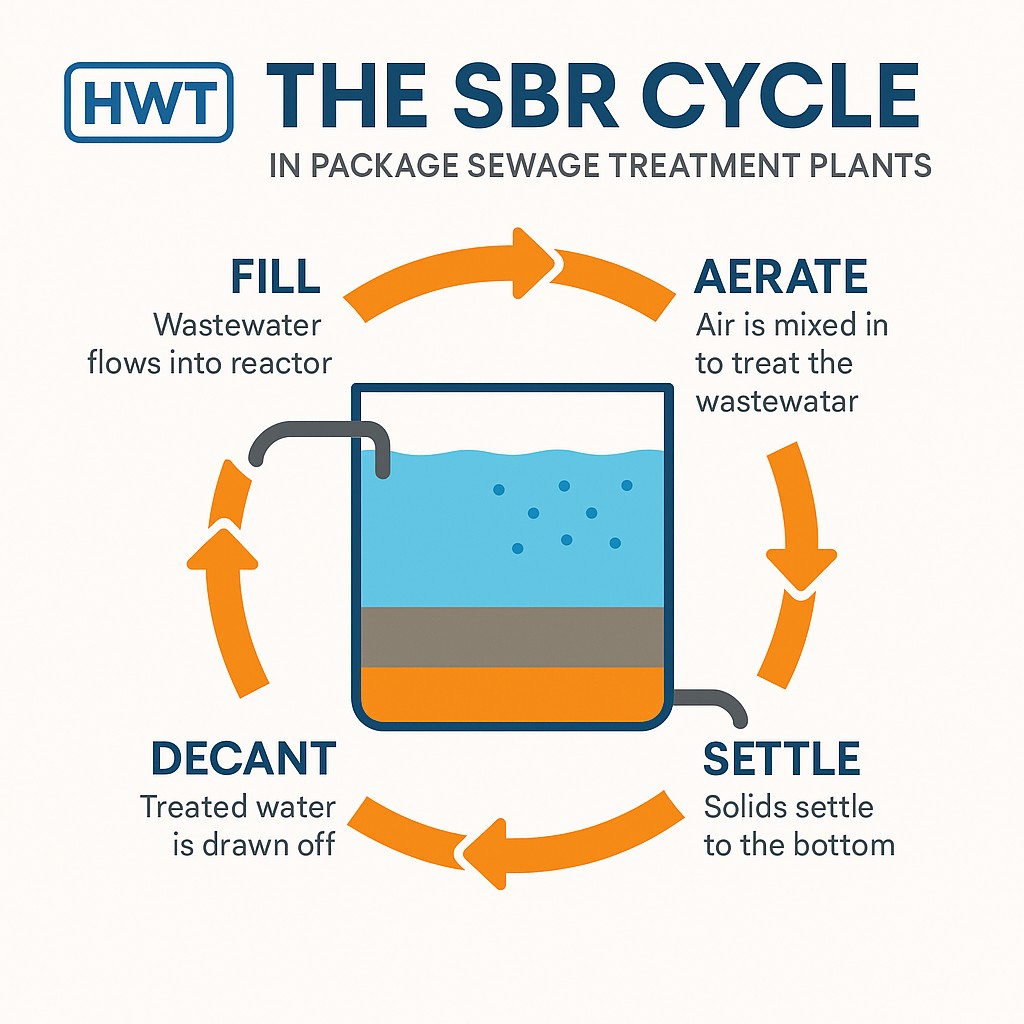
2. The Five Treatment Phases of an SBR
1. Fill
Wastewater flows into the reactor.
During this stage, air may be introduced to activate and stimulate bacterial activity.
2. Aerate
This is the core treatment phase.
Fine bubble diffusers or mechanical aerators provide oxygen to support microorganisms.
The bacteria break down:
- Organic matter (BOD/COD)
- Ammonia through nitrification
- Other nutrients
By the end of this stage, polluted water becomes biologically stabilised.
3. Settle
Aeration is stopped.
The contents of the tank become still, allowing solids (activated sludge) to settle at the bottom — similar to a snow globe settling after being shaken.
Clear treated water rises to the top.
4. Decant
A floating decanter or pump carefully removes the clarified supernatant without disturbing the settled sludge layer.
5. Idle / Sludge Wasting
Excess sludge is withdrawn from the base of the tank.
This maintains system balance and prepares the reactor for the next fill cycle.
3. Why SBRs Are Preferred in Package Plants
SBR systems are widely adopted in compact treatment solutions because:
- All treatment stages occur within a single tank
- They require a smaller footprint
- They produce high-quality effluent suitable for reuse or safe discharge
- They manage shock loads effectively (e.g., holiday homes, school campuses, wineries, lodges)
- They are fully automated using PLC controls
- They require minimal maintenance
- They are energy-efficient, as aeration operates in timed intervals
4. Common Applications of SBR Technology
SBR systems are well suited for:
- Residential developments
- Lodges and remote facilities
- Office buildings and shopping centres
- Schools and universities
- Food and beverage processing units
- Small towns and rural communities
Wherever dependable, high-quality sewage treatment is required in a compact format, SBR technology is an excellent choice.
5. Summary
A Sequencing Batch Reactor treats wastewater through a straightforward five-stage cycle — fill, aerate, settle, decant, and idle — all within one tank.
It produces clear, safe, and reusable water while maintaining a compact footprint and a high level of automation.
As a result, SBR remains one of the most efficient and flexible technologies available for package sewage treatment plants.
Source – hwt.co.za