Understanding Multi-Stage Water Filtration Systems
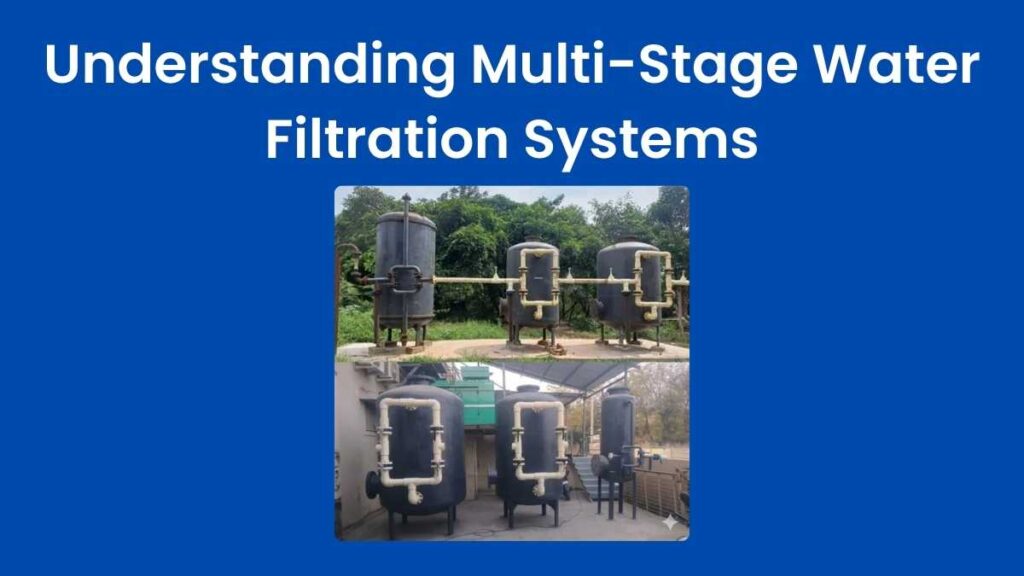
Introduction Access to clean and safe water is essential for homes, industries, hotels, and commercial establishments. However, raw water from borewells, municipal supply, or surface sources often contains multiple contaminants — including suspended solids, chemicals, bacteria, and dissolved salts. A single filtration method is rarely sufficient to remove all impurities effectively. This is why multi-stage water filtration systems are widely used across residential, commercial, and industrial applications. Each stage in a multi-stage filtration system plays a specific role in removing different types of contaminants. When engineered correctly, these systems ensure balanced water quality without excessive wastage or unnecessary chemical usage. Understanding how multi-stage water filtration works helps property owners and industries make informed decisions about water treatment solutions. Why Single-Stage Filtration is Not Enough Water contamination is complex. Different impurities require different removal techniques. For example: Relying on a single-stage system often leads to incomplete purification and inefficiency. Multi-stage filtration ensures comprehensive treatment by addressing contaminants sequentially. Stage 1: Sediment Removal (Pre-Filtration) The first stage of most water filtration systems focuses on removing suspended particles such as: Sediment filters act as protective barriers, preventing larger particles from entering downstream components. Why This Stage is Important Without proper sediment filtration, advanced purification components can fail prematurely. Stage 2: Chemical Filtration (Activated Carbon) After removing physical impurities, the next stage targets chemical contaminants. Activated carbon filters are highly effective in removing: Activated carbon works through adsorption, trapping impurities within its porous structure. Benefits of Activated Carbon Filtration ✔ Improves taste and odour✔ Reduces harmful organic compounds✔ Enhances overall water quality This stage is essential for both residential drinking water and industrial process water. Stage 3: Bacterial Elimination (UV Sterilisation) Water can contain harmful microorganisms that are invisible to the naked eye. UV sterilisation uses ultraviolet light to destroy bacteria, viruses, and pathogens without adding chemicals. Advantages of UV Treatment UV treatment is particularly important for borewell water and areas prone to microbial contamination. Stage 4: Final Purification (Reverse Osmosis – RO) Reverse Osmosis is one of the most advanced water purification technologies. RO membranes remove: This stage ensures high-quality drinking water, especially in areas with high salinity or brackish groundwater. Why RO Requires Pre-Treatment RO membranes are delicate. Without sediment and carbon pre-filtration, membranes can clog and fail quickly. A well-designed multi-stage system protects the RO unit and ensures optimal efficiency. Additional Treatment Stages (Optional) Depending on water quality, systems may include: Customisation ensures that treatment matches actual water conditions. Benefits of a Professionally Engineered Multi-Stage System A properly designed system offers: ✔ Balanced Water Quality Each stage works together to deliver safe and stable water. ✔ Reduced Wastage Proper pressure control and system sizing prevent excessive water rejection. ✔ Extended Equipment Lifespan Pre-treatment protects sensitive components like RO membranes. ✔ Energy Efficiency Optimised flow rates reduce pump load. ✔ Long-Term Cost Savings Reduced maintenance and repair costs. Applications of Multi-Stage Water Filtration Systems Multi-stage systems are used in: Residential Homes Ensuring safe drinking and bathing water. Apartment Complexes Providing centralised treatment for multiple units. Hotels & Resorts Maintaining water quality for guests and operations. Commercial Buildings Supplying safe water for offices and facilities. Industrial Units Supporting manufacturing processes and cooling systems. Each application requires specific configuration based on demand and water characteristics. Importance of Water Testing Before Installation Every water source is different. Professional water testing helps determine: Without proper testing, installing unnecessary components increases cost without improving performance. Engineering decisions must be data-driven. Maintenance: Key to Long-Term Performance Even the best-designed multi-stage system requires regular maintenance. Maintenance includes: Routine servicing ensures consistent water quality and prevents system failure. Environmental Benefits of Multi-Stage Filtration Professionally designed systems support sustainability by: Efficient filtration ensures minimal resource wastage. Signs Your Filtration System May Need Upgrade You may require system enhancement if: Periodic evaluation ensures continued performance. Why Professional Engineering Matters Improperly designed systems can cause: A professionally engineered multi-stage filtration system ensures optimal balance between performance, efficiency, and cost. Conclusion Multi-stage water filtration systems are essential for delivering safe, clean, and balanced water quality. Each stage plays a critical role: When combined properly, these stages ensure comprehensive treatment without excessive wastage. Investing in a professionally designed multi-stage water filtration system is a long-term solution for homes, industries, and hospitality properties seeking reliable and sustainable water quality. Clean water requires precision engineering — and multi-stage filtration delivers exactly that.