SBR Based Sewage Treatment Plants

SBR Based Sewage Treatment Plants

Why Choosing an Experienced Water Treatment Partner Matters

Introduction Water treatment is not a one-time installation — it is a long-term engineering commitment. Whether it involves a Sewage Treatment Plant (STP), industrial water treatment system, borewell filtration unit, swimming pool MEP setup, or Atmospheric Water Generation (AWG) system, the success of any project depends heavily on the expertise behind its design, installation, and maintenance. Choosing an experienced water treatment partner can make the difference between a reliable, cost-efficient system and a recurring operational problem. In today’s environment of strict regulatory standards, rising operational costs, and increasing sustainability expectations, expertise is not optional — it is essential. Water Treatment Requires Expert Design Every water source is unique. Water quality varies based on: An experienced water treatment partner begins every project with: Without professional design, systems may be: Expert design ensures optimal performance from day one. Importance of Proper Testing & Commissioning Installation alone does not guarantee performance. Proper commissioning includes: Commissioning ensures the system operates as intended before full-scale usage begins. Skipping proper testing can lead to early breakdowns and compliance failures. Preventive Maintenance: The Key to Long-Term Reliability Water treatment systems operate continuously. Over time, components such as: require inspection and maintenance. Preventive maintenance ensures: ✔ Consistent water quality✔ Reduced emergency breakdowns✔ Lower repair costs✔ Extended equipment lifespan✔ Regulatory compliance An experienced partner provides structured maintenance schedules rather than reactive repairs. Regulatory Compliance & Documentation Water treatment systems must comply with: An experienced partner understands: Improper documentation can delay approvals or result in penalties. Professional water treatment companies ensure smooth regulatory processes. Handling Complex Challenges Every project presents unique challenges, such as: An inexperienced contractor may struggle with unexpected complications. An experienced water treatment partner anticipates these issues and designs resilient systems capable of handling real-world conditions. Customised Solutions vs Standard Installations Many low-cost vendors offer standard, pre-packaged solutions. However, water treatment requires: Customisation ensures: Experience ensures solutions are engineered — not simply assembled. Cost Efficiency Through Expertise While cheaper installations may appear cost-effective initially, they often result in: An experienced partner designs systems that: Long-term cost efficiency always outweighs short-term savings. Technical Support & After-Sales Service Water treatment systems require continuous technical support. An experienced partner provides: Without proper after-sales service, even advanced systems can become unreliable. Sustainability & Environmental Responsibility Modern water infrastructure must prioritise sustainability. An experienced water treatment company ensures: Sustainability is not just a trend — it is a responsibility. Proven Track Record Matters Experience is measured not only in years but in successful projects. With: A trusted water treatment partner demonstrates: A proven track record reduces risk for builders, industries, and hospitality clients. Why Water Treatment is a Long-Term Partnership Unlike other infrastructure components, water systems interact with: Choosing a water treatment partner is not just selecting a contractor — it is forming a long-term technical partnership. Warning Signs of an Inexperienced Provider Be cautious if a vendor: Professional engineering requires transparency and technical clarity. Industries That Depend on Experienced Water Treatment Partners Each sector requires tailored expertise. The Value of Reliability Water-related failures can cause: An experienced partner ensures reliability and performance consistency. Conclusion Water treatment is a complex engineering process that demands expertise, precision, and long-term commitment. It requires: With 15+ years of experience, 35+ completed projects, and 100% client satisfaction, a trusted water treatment partner ensures reliability and environmental responsibility in every project. Choosing experience means choosing: In water treatment, expertise is not just valuable — it is indispensable.

SBR Based Sewage Treatment Plants

Sustainable Water Management for Hotels & Resorts in Goa

Introduction Goa’s hospitality industry thrives on pristine beaches, luxury villas, boutique resorts, and premium guest experiences. However, behind every successful hotel or resort lies a complex operational system — and water management is one of its most critical components. Hotels and resorts consume large volumes of water daily for: With increasing water scarcity, rising tanker costs, and stricter environmental regulations, sustainable water management has become essential for hospitality businesses in Goa. Integrated water treatment solutions not only reduce operational costs but also enhance eco-friendly branding and long-term profitability. Why Sustainable Water Management Matters in Goa Goa faces seasonal water stress, especially during peak tourist months. Many properties rely on: These sources are often inconsistent, costly, and environmentally unsustainable. Hotels that fail to implement efficient water systems may face: Sustainable water infrastructure is now a competitive advantage in the hospitality sector. Integrated Water Solutions for Hotels & Resorts A holistic approach to water management combines multiple technologies to ensure efficiency, reliability, and sustainability. 1️⃣ SBR Sewage Treatment Plants (STPs) One of the most important components of sustainable water management is wastewater treatment. Sequencing Batch Reactor (SBR) STPs treat sewage generated from guest rooms, kitchens, and other facilities. Benefits of SBR STPs for Hotels Water Reuse Applications Treated water can be reused for: This reduces freshwater dependency and tanker costs significantly. For large resorts, wastewater recycling can lower overall water consumption by a substantial margin. 2️⃣ Swimming Pool MEP Optimisation Pools are central attractions in Goa’s hospitality properties. However, poorly designed pool systems can lead to: Optimised Mechanical, Electrical & Plumbing (MEP) systems ensure: Energy-efficient pool systems reduce operational costs while maintaining crystal-clear water for guests. 3️⃣ Borewell Water Filtration Systems Many hotels rely on borewell water, which often contains: Untreated borewell water can damage plumbing, laundry systems, and guest amenities. A multi-stage borewell filtration system ensures: Professional water testing helps design customised filtration systems tailored to the property’s needs. 4️⃣ Atmospheric Water Generation (AWG) Atmospheric Water Generators produce drinking water directly from air humidity. For hotels in Goa, AWG technology offers: Guests increasingly appreciate eco-friendly initiatives. Providing water generated from renewable atmospheric sources strengthens sustainability credentials. Cost Reduction Through Integrated Water Management Sustainable water systems reduce: Over time, these savings significantly improve profitability. Instead of viewing water treatment as an expense, it should be considered an operational investment. Environmental Compliance & Brand Reputation Pollution control boards require proper wastewater treatment for hotels and resorts. Non-compliance can result in: Installing modern STPs and water treatment systems ensures regulatory compliance. Additionally, eco-conscious travellers prefer sustainable properties. Highlighting water recycling and conservation efforts enhances brand image. Enhancing Guest Satisfaction Guests expect: Water-related complaints can damage reviews and reputation. Efficient water systems ensure uninterrupted supply and superior guest experience. Supporting Green Building Certifications Hotels implementing sustainable water solutions may qualify for green building certifications and environmental recognition programs. Integrated systems demonstrate: These certifications improve market positioning. Long-Term Sustainability Strategy A sustainable water strategy for hotels should include: Continuous monitoring and upgrades ensure consistent performance. Importance of Professional Engineering & Maintenance Water management systems require: Improper installation can lead to inefficiencies and higher long-term costs. Working with experienced water treatment specialists ensures durability, compliance, and performance. Future of Hospitality Water Management in Goa As tourism continues to grow, sustainable infrastructure will define the success of hospitality businesses. Water-efficient hotels will: Integrated solutions such as SBR STPs, optimised pool MEP systems, borewell filtration, and AWG technology represent the future of water management in Goa. Conclusion Hotels and resorts in Goa consume substantial water daily. Without sustainable management systems, rising costs and environmental challenges can impact profitability and reputation. Integrated water solutions including: help reduce costs while promoting eco-friendly branding. Sustainable water management is no longer optional — it is essential for long-term hospitality success.

SBR Based Sewage Treatment Plants

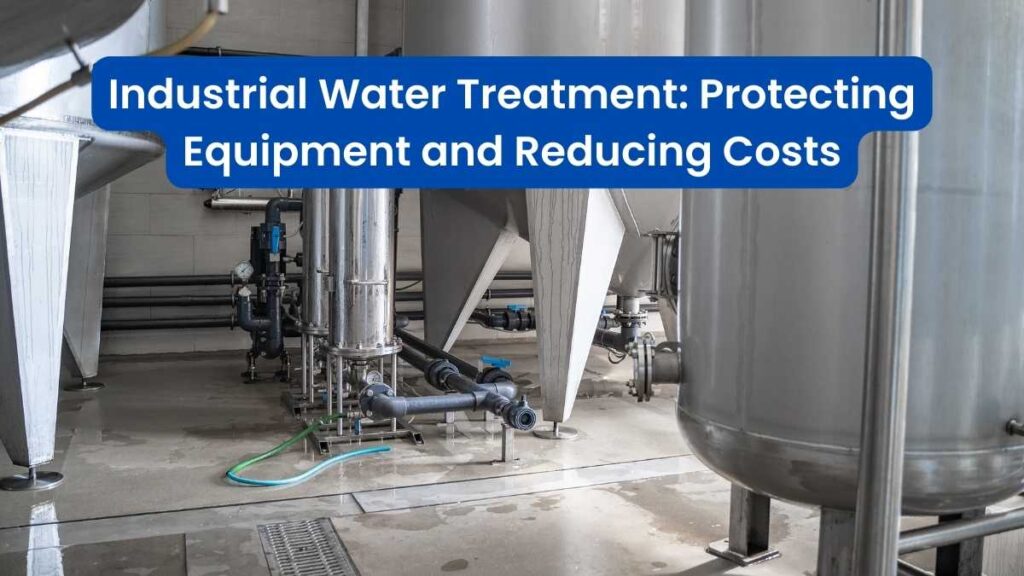
Industrial Water Treatment: Protecting Equipment and Reducing Costs

Introduction Water is one of the most critical resources in industrial operations. From cooling towers and boilers to manufacturing processes and cleaning systems, industries depend heavily on consistent and high-quality water supply. However, untreated water can silently damage expensive machinery, increase downtime, reduce production efficiency, and significantly raise maintenance costs. This is why industrial water treatment systems are not optional — they are essential for protecting equipment, ensuring regulatory compliance, and maintaining long-term profitability. A professionally designed industrial water treatment solution helps businesses prevent scaling, corrosion, and contamination while improving operational efficiency. The Hidden Risks of Untreated Industrial Water Many industries rely on borewell or municipal water without analysing its chemical composition. While the water may appear clean, it often contains dissolved minerals, salts, hardness, and microorganisms that can harm equipment. Let’s understand the major risks. 1. Scaling Scaling occurs when hard water containing calcium and magnesium deposits mineral layers inside pipes, boilers, and heat exchangers. Consequences of scaling include: Even a thin layer of scale can reduce heat efficiency drastically, leading to higher operational costs. 2. Corrosion Corrosion is caused by dissolved oxygen, acidic pH levels, and chemical imbalances in untreated water. Corrosion leads to: Corrosion is not only costly but can also create safety hazards in industrial environments. 3. Reduced Machinery Lifespan Continuous exposure to untreated water accelerates wear and tear on: Frequent repairs and replacements increase capital expenditure and disrupt operations. Why Industrial Water Treatment is Critical A comprehensive industrial water treatment system ensures optimal water quality tailored to specific industrial processes. Key Benefits Include: ✔ Equipment Efficiency Properly treated water improves heat transfer efficiency in boilers and cooling systems. This ensures machinery operates at optimal performance levels, reducing energy consumption. ✔ Reduced Downtime Unexpected equipment failure can halt production and cause major financial losses. Industrial water treatment prevents scaling and corrosion, reducing emergency breakdowns. ✔ Lower Maintenance Costs Less scaling and corrosion mean: Preventive water treatment is significantly more economical than reactive repairs. ✔ Regulatory Compliance Industries must comply with: Proper treatment ensures compliance, avoiding penalties and legal complications. Key Components of Industrial Water Treatment Systems Every industry has unique water requirements. A customised treatment solution may include: 1. Water Softening Systems Water softeners remove calcium and magnesium ions responsible for hardness. This prevents scale formation in boilers and heat exchangers. 2. Reverse Osmosis (RO) Systems Industrial RO plants remove: RO systems are essential where high purity water is required. 3. Chemical Dosing Systems Precise chemical dosing controls: Automated dosing ensures consistent water quality. 4. Filtration Systems Multi-stage filtration removes suspended solids and impurities before water enters industrial equipment. 5. Cooling Tower Water Treatment Cooling towers require specialised treatment to prevent biological growth, scaling, and corrosion. Custom-Designed Solutions for Long-Term Success No two industrial facilities are the same. Factors influencing water treatment design include: Professional water analysis and system design ensure optimal configuration. A one-size-fits-all approach often results in inefficiency and higher costs. Economic Impact of Proper Water Treatment Industrial water treatment should be viewed as an investment rather than an expense. Cost Savings Come From: Over time, the savings from preventive treatment far exceed installation costs. Sustainability & Environmental Responsibility Modern industries are increasingly adopting sustainable practices. Proper water treatment supports: Efficient water management strengthens corporate reputation and stakeholder confidence. Warning Signs Your Industrial Water Needs Treatment If your facility experiences: It may indicate inadequate water treatment. Early intervention prevents costly operational disruptions. Importance of Professional Installation & Maintenance Industrial water treatment systems require: Routine inspections ensure: Neglecting maintenance reduces system efficiency and increases long-term costs. Why Experience Matters in Industrial Water Treatment Industrial water systems involve complex engineering. Working with experienced water treatment professionals ensures: An experienced partner understands industry-specific challenges and delivers customised, reliable solutions. Conclusion Untreated industrial water can silently damage equipment, reduce efficiency, and increase operating costs. Scaling, corrosion, and contamination not only shorten machinery lifespan but also impact profitability. Industrial water treatment ensures: Custom-designed water treatment solutions are essential for long-term industrial success. By investing in professional water treatment systems, industries protect their infrastructure, optimise operations, and build a resilient foundation for growth.

SBR Based Sewage Treatment Plants

How a Proper STP Can Help Builders Meet Environmental Regulations

Introduction In today’s real estate and infrastructure landscape, environmental compliance is no longer a formality — it is a mandatory requirement. Builders and developers must meet strict pollution control norms before receiving approvals for residential complexes, commercial projects, hospitality developments, and industrial facilities. One of the most critical requirements is the installation of a properly designed and compliant Sewage Treatment Plant (STP). A well-engineered STP not only ensures adherence to environmental regulations but also protects groundwater, enables water reuse, improves approval timelines, and strengthens a builder’s brand credibility. For forward-thinking developers, installing a proper STP is not just about compliance — it is about sustainable and responsible construction. Why Environmental Compliance is Critical for Builders Regulatory authorities and Pollution Control Boards require projects above certain sizes to install on-site sewage treatment systems. The objective is to: Failure to comply can result in: As environmental regulations become stricter each year, integrating wastewater treatment into project planning from the initial design stage is essential. How a Proper STP Prevents Groundwater Contamination Untreated sewage contains: When discharged improperly, sewage can seep into soil and contaminate groundwater aquifers. This not only affects the project site but also impacts nearby communities and ecosystems. A professionally designed STP ensures: By preventing groundwater contamination, builders protect both the environment and public health. Enabling Water Reuse: Turning Waste into a Resource Water scarcity is becoming a serious challenge across India, especially in urban and coastal regions. A properly functioning STP allows treated wastewater to be reused for non-potable applications such as: Water reuse offers significant benefits: ✔ Reduced freshwater dependency✔ Lower borewell extraction✔ Reduced tanker costs✔ Long-term operational savings For large residential complexes and commercial developments, water recycling can reduce water procurement expenses substantially. Improving Project Approval Chances Environmental clearance and consent from Pollution Control Boards are often dependent on adequate wastewater management systems. Installing a compliant STP demonstrates: Authorities are more likely to approve projects that incorporate sustainable wastewater solutions from the planning stage. In many cases, improper or under-designed STPs lead to rejections, modifications, or additional compliance costs. A professionally engineered STP ensures smooth inspections and faster approval processes. Enhancing Brand Credibility & Market Value Today’s homebuyers, investors, and commercial tenants are increasingly environmentally conscious. Sustainable infrastructure is no longer a luxury — it is a selling point. Projects with advanced sewage treatment systems signal: Builders who prioritise proper wastewater management strengthen their brand image and attract eco-conscious buyers. In competitive markets like Goa, where tourism and real estate intersect, sustainability adds measurable value. The Role of SBR Technology in Modern STPs Among modern sewage treatment technologies, Sequencing Batch Reactor (SBR) systems are highly preferred for residential and commercial projects. SBR STPs offer: This makes them ideal for space-constrained developments and hospitality projects. Builders benefit from lower land requirements and simplified infrastructure. Long-Term Cost Advantages of a Proper STP While some developers view STPs as an expense, they are actually long-term cost-saving systems. Benefits include: Improperly designed STPs, on the other hand, lead to recurring breakdowns, foul odours, resident complaints, and high repair costs. Investing in quality engineering from the beginning prevents costly corrections later. Importance of Expert Design & Customisation Every project has unique wastewater characteristics based on: A one-size-fits-all STP design can lead to underperformance or overdesign. Professional water treatment engineers conduct: Customised STP design ensures optimal efficiency and regulatory adherence. Testing, Commissioning & Maintenance An STP’s performance does not depend solely on installation. Proper: are essential for long-term reliability. Regular monitoring ensures effluent quality remains within permissible limits. Ongoing technical support prevents sludge bulking, odour issues, and mechanical failures. Why Builders Need Experienced Water Treatment Partners With over 15+ years of expertise supporting leading builders across Goa, professional water treatment partners understand: Experience ensures smooth execution, compliance, and long-term performance. Conclusion Environmental regulations are becoming increasingly strict, and sustainable infrastructure is the future of construction. Installing a properly designed Sewage Treatment Plant helps builders: A well-engineered STP is not just a compliance requirement — it is a strategic investment in sustainability, efficiency, and reputation. For modern builders, responsible wastewater management is no longer optional. It is the foundation of future-ready development.

SBR Based Sewage Treatment Plants

Why SBR Sewage Treatment Plants Are the Future of Wastewater Management

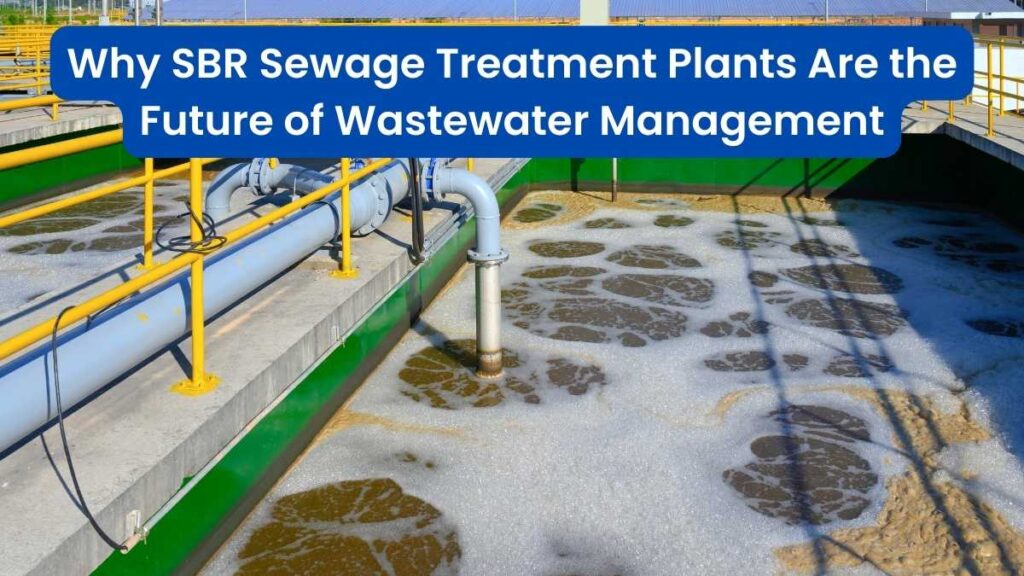
With increasing environmental regulations, rapid urbanisation, and growing water scarcity, effective wastewater management is no longer optional — it is a critical necessity. Residential complexes, hotels, commercial buildings, and industrial facilities are now required to treat sewage responsibly before discharge or reuse. Traditional sewage treatment methods, although widely used in the past, often require large land areas, multiple tanks, complex piping systems, and high operational costs. Today, modern infrastructure demands compact, efficient, and environmentally sustainable solutions. This is where Sequencing Batch Reactor (SBR) Sewage Treatment Plants are redefining wastewater management. SBR technology has emerged as one of the most advanced, reliable, and cost-effective wastewater treatment systems available — making it the future of decentralised sewage treatment. Understanding SBR Technology Sequencing Batch Reactor (SBR) is an advanced biological wastewater treatment process that operates in time-sequenced cycles within a single reactor tank. Unlike conventional continuous-flow systems, which require separate tanks for primary clarification, aeration, and secondary settling, SBR integrates all these processes into one unit. The system operates in four controlled stages: 1. Fill Raw sewage enters the reactor tank. 2. Aeration Oxygen is supplied to promote biological oxidation, breaking down organic matter and removing nutrients such as nitrogen and phosphorus. 3. Settle The aeration stops, allowing suspended solids to settle naturally at the bottom of the tank. 4. Decant Clear treated water is carefully removed from the top, leaving settled sludge behind for the next cycle. This time-based treatment cycle ensures efficient removal of contaminants while simplifying infrastructure requirements. Why SBR Sewage Treatment Plants Are Superior to Conventional Systems Traditional sewage treatment plants typically involve: These systems require higher capital investment and ongoing operational costs. In contrast, SBR technology offers significant advantages: 1. Higher Treatment Efficiency SBR systems provide excellent Biological Oxygen Demand (BOD) and Chemical Oxygen Demand (COD) removal. The cyclic aeration process also enhances nutrient removal through Enhanced Biological Nutrient Removal (EBNR), ensuring treated water meets pollution control standards. 2. Compact Footprint Since all treatment stages occur in a single reactor, SBR requires significantly less land space. This makes it ideal for: 3. Reduced Operational Cost With fewer tanks, pumps, and mechanical components, SBR systems reduce: The simplified design translates into long-term cost savings. 4. Better Compliance with Environmental Regulations Environmental norms are becoming increasingly stringent. SBR plants consistently produce high-quality effluent that complies with pollution control board standards, making them future-ready solutions for developers and industries. Intelligent Automation for Reliable Performance Modern SBR systems are equipped with PLC (Programmable Logic Controller) automation, ensuring precise control of treatment cycles. Automation provides: This makes SBR particularly suitable for facilities with fluctuating wastewater loads, such as hotels and commercial complexes. Sustainable and Chemical-Free Operation One of the biggest advantages of SBR technology is its ability to achieve nutrient removal without heavy chemical dosing. This reduces operational costs and minimises environmental impact. SBR systems: In an era focused on sustainability and ESG compliance, SBR aligns perfectly with green building practices. Water Reuse: Turning Waste into a Resource Treated water from SBR Sewage Treatment Plants can be reused for: This reduces freshwater consumption and lowers dependency on borewells and municipal supply. Water recycling not only conserves resources but also significantly reduces operating expenses for large facilities. Ideal Applications of SBR Sewage Treatment Plants SBR technology is versatile and adaptable, making it suitable for various sectors: Hotels & Resorts Handle fluctuating wastewater loads efficiently while enabling water reuse for landscaping. Housing Societies & Residential Complexes Compact, decentralised systems ideal for urban developments. Commercial Complexes & IT Parks Reliable on-site treatment ensuring environmental compliance. Industrial Units Stable performance even under varying effluent loads. Its modular construction allows scalability, making it adaptable for future expansion. Easy Retrofitting & Upgrade Capability SBR systems can also be integrated into existing sewage treatment plants. Older conventional systems can be upgraded with SBR technology without complete replacement, reducing infrastructure costs. This makes it a practical solution for facilities seeking performance improvement without major structural modifications. Long-Term Reliability and Durability SBR plants are engineered with robust materials and high-quality components. Their simplified design ensures: When designed and installed correctly, SBR systems deliver consistent performance for decades. Why Choose Expert Engineering for SBR Installation The efficiency of an SBR Sewage Treatment Plant depends on proper design, installation, and commissioning. Customisation based on: is critical to achieving optimal performance. Professional execution ensures: The Future of Wastewater Management As water scarcity intensifies and regulatory frameworks tighten, infrastructure must adapt to smarter and more sustainable technologies. SBR Sewage Treatment Plants represent the future because they combine: For developers, industries, hotels, and residential communities, investing in SBR technology is not just about meeting regulations — it is about building responsible and sustainable infrastructure. Wastewater is no longer just waste. With advanced SBR technology, it becomes a recoverable and reusable resource. The future of wastewater management is intelligent, compact, automated, and sustainable — and SBR is leading the way.

SBR Based Sewage Treatment Plants

Advanced Wastewater Treatment with SBR Technology

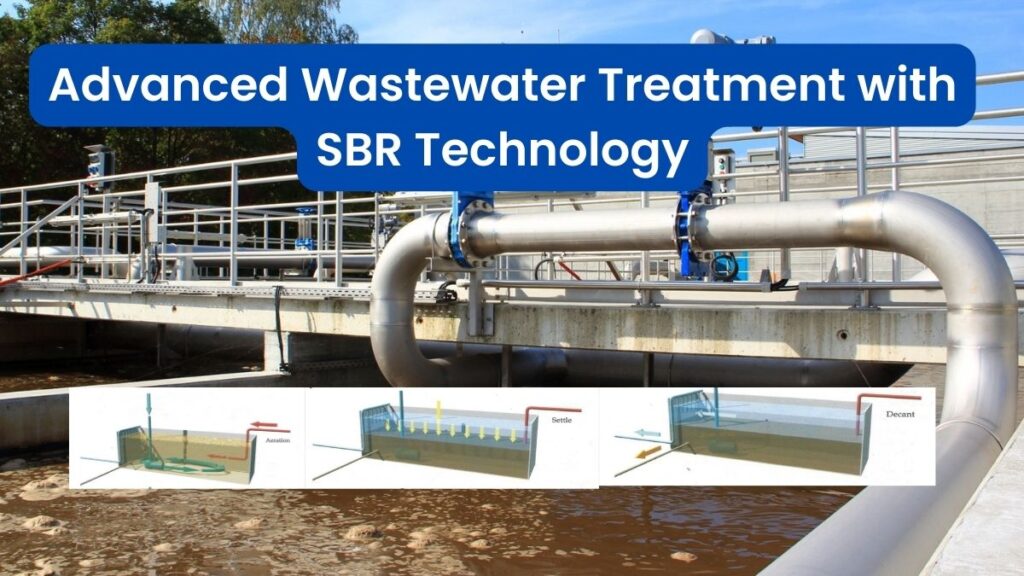
As urbanisation accelerates and environmental regulations become stricter, wastewater treatment is no longer optional — it is mandatory. Builders, industries, hotels, and residential complexes are required to implement efficient on-site treatment systems that comply with pollution control norms while remaining cost-effective. Among modern wastewater technologies, Sequencing Batch Reactor (SBR) stands out as one of the most advanced and reliable systems available today. What is SBR Technology? Sequencing Batch Reactor (SBR) is an advanced wastewater treatment process that operates in timed cycles within a single tank. Unlike conventional continuous-flow systems that require multiple tanks for primary clarification, aeration, and secondary clarification, SBR integrates all biological treatment processes into one reactor. The system follows four main stages: 1. Fill Wastewater enters the reactor tank. 2. Aeration Oxygen is supplied to promote biological oxidation, breaking down organic matter and removing nutrients. 3. Settle Solids settle naturally, separating treated water from sludge. 4. Decant Clear treated water is removed from the top without disturbing settled sludge. This cyclic operation ensures highly efficient treatment with minimal infrastructure. Why SBR is Superior to Conventional Systems Traditional sewage treatment plants require: SBR eliminates these components by combining them into a single-tank process. Key Advantages: ✔ Reduced land requirement✔ Lower capital investment✔ Reduced operational cost✔ No recycle return streams✔ Simplified maintenance✔ Better sludge settleability This makes SBR ideal for urban developments and space-constrained projects. Enhanced Biological Nutrient Removal (EBNR) SBR systems incorporate Enhanced Biological Nutrient Removal (EBNR), which ensures: The result is high-quality treated water suitable for reuse. Intelligent PLC Automation Modern SBR systems are equipped with PLC-based automation. This allows: Automation reduces manpower dependency and ensures consistent effluent output. Tertiary Filtration for Superior Water Quality To enhance treated water quality further, tertiary systems can be integrated: UV Disinfection Pressure Sand Filter (PSF) Removes suspended solids and turbidity. Activated Carbon Filter (ACF) Eliminates colour, odour, and trace organics. These polishing units ensure compliance with pollution control board standards. Applications of SBR Technology SBR Sewage Treatment Plants are ideal for: Reuse Applications of Treated Water SBR-treated water can be reused for: This reduces freshwater consumption and lowers operational expenses. The Future of Wastewater Management With compact footprint, chemical-free operation, modular scalability, and automation, SBR represents the future of decentralised wastewater treatment. For modern infrastructure projects, SBR is not just a compliance requirement — it is a long-term investment in sustainability.

SBR Based Sewage Treatment Plants

How a Sequencing Batch Reactor (SBR) Works in a Package Sewage Treatment Plant

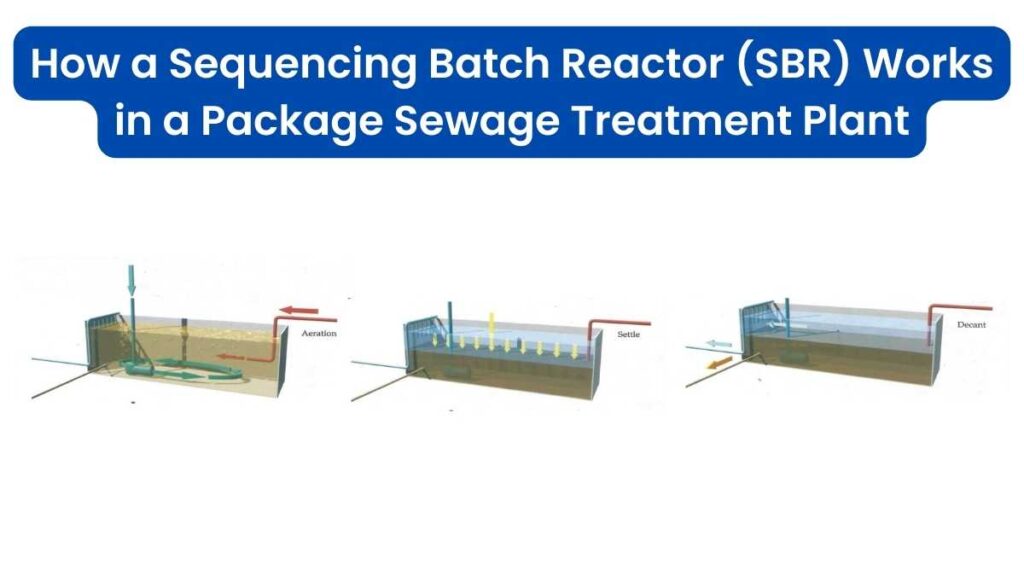
A Sequencing Batch Reactor (SBR) is an intelligent, space-saving, and highly effective biological treatment system used for both domestic and industrial wastewater. Rather than relying on multiple tanks, an SBR completes every treatment stage within a single tank — operating in a timed sequence. This makes it especially suitable for package sewage treatment plants and locations where space is limited. 1. What Is an SBR? A Sequencing Batch Reactor is a fill-and-draw activated sludge system. In simple terms, wastewater enters the tank, undergoes biological treatment, the clarified water is discharged, and the cycle repeats. Unlike traditional continuous-flow systems, an SBR operates in controlled cycles. This time-based approach delivers high-quality effluent while maintaining relatively low sludge production. 2. The Five Treatment Phases of an SBR 1. Fill Wastewater flows into the reactor.During this stage, air may be introduced to activate and stimulate bacterial activity. 2. Aerate This is the core treatment phase.Fine bubble diffusers or mechanical aerators provide oxygen to support microorganisms. The bacteria break down: By the end of this stage, polluted water becomes biologically stabilised. 3. Settle Aeration is stopped.The contents of the tank become still, allowing solids (activated sludge) to settle at the bottom — similar to a snow globe settling after being shaken. Clear treated water rises to the top. 4. Decant A floating decanter or pump carefully removes the clarified supernatant without disturbing the settled sludge layer. 5. Idle / Sludge Wasting Excess sludge is withdrawn from the base of the tank.This maintains system balance and prepares the reactor for the next fill cycle. 3. Why SBRs Are Preferred in Package Plants SBR systems are widely adopted in compact treatment solutions because: 4. Common Applications of SBR Technology SBR systems are well suited for: Wherever dependable, high-quality sewage treatment is required in a compact format, SBR technology is an excellent choice. 5. Summary A Sequencing Batch Reactor treats wastewater through a straightforward five-stage cycle — fill, aerate, settle, decant, and idle — all within one tank. It produces clear, safe, and reusable water while maintaining a compact footprint and a high level of automation. As a result, SBR remains one of the most efficient and flexible technologies available for package sewage treatment plants. Source – hwt.co.za

SBR Based Sewage Treatment Plants

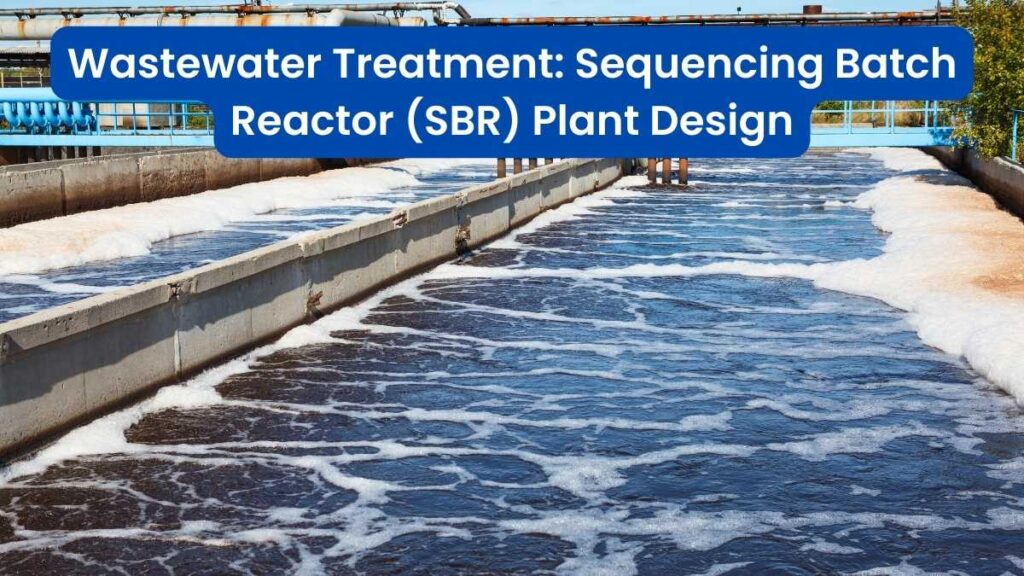
Wastewater Treatment: Sequencing Batch Reactor (SBR) Plant Design

One widely used variation of the activated sludge process is the Sequencing Batch Reactor (SBR). In this blog, we explain how the SBR wastewater treatment process works and examine both the advantages and limitations of an SBR system. There are several types of wastewater treatment plant designs. Activated sludge systems are commonly used because they are capable of treating wastewater within a relatively short timeframe. Among the different activated sludge configurations, the Sequencing Batch Reactor (SBR) is one of the most popular options. The basic design of an SBR wastewater treatment system consists of a single tank that performs both biological treatment and clarification. The treatment cycle includes the following steps: This four-stage cycle can be repeated multiple times each day. During the react phase, aeration may be switched on and off to promote nitrification and denitrification for effective nitrogen removal. Now that we understand the working principle of an SBR wastewater system, let’s review its advantages. Advantages of SBR Wastewater Systems SBR systems typically require less space and piping compared to traditional setups that use separate aeration tanks and clarifiers. Another key benefit is their ability to create both aerobic and anoxic conditions within the same tank. This enables processes such as organic carbon removal, biological phosphorus removal, nitrification, and denitrification to occur in a single reactor. SBR systems can also manage influent containing suspended solids and, in many cases, operate without the need for a primary clarifier before the SBR tank. However, despite these benefits, SBR systems also present certain challenges that must be carefully considered. Disadvantages of SBR Wastewater Systems May Require Two Tanks Since SBR systems operate in batch mode, wastewater must be stored while the reactor is not in the filling stage. This requires either an equalisation/holding tank or at least two SBR tanks so that one unit can fill while the other is in a different phase. Additionally, cycle durations may need to be shortened during periods of high flow or extended during times of heavy loading. Operational Control and Manual Adjustments The primary control method in many SBR systems involves adjusting the timing of each operational stage, including aeration on/off cycles. This requires operators to closely monitor biomass conditions and effluent quality. Such manual oversight can be time-intensive and may increase the risk of human error. Challenges in Maintaining Biomass Suspension During the fill phase, adequate mixing may not always be achieved to properly suspend the biomass. Aeration is typically turned off during this stage, creating anoxic conditions. Under these conditions, biomass can ferment organic matter, producing volatile fatty acids, sulphide, and ammonia. While volatile fatty acids are beneficial for phosphate removal and denitrification, maintaining the correct balance between aerobic and anoxic conditions can be challenging. Achieving optimal removal of organic matter (COD), nitrogen, and phosphorus requires careful control. Anoxic conditions can also be created by switching off aeration during the react stage, but balancing treatment efficiency remains a technical challenge. Settling Problems SBR systems may encounter issues related to filamentous bacteria and poor sludge settling. If biomass does not settle effectively, it becomes difficult to decant sufficient treated water while maintaining the desired cycle time and influent flow rate. Filament growth may be encouraged by low dissolved oxygen levels during filling or aeration-off periods, nutrient deficiencies, and high concentrations of solids or fats, oils, and grease (FOG), especially in systems without a primary clarifier. Conclusion If you are considering an SBR wastewater treatment plant design, it is essential to consult an experienced wastewater treatment professional. Proper system design and operational guidance are crucial to ensure efficient performance and to address any challenges that may arise. Monera Technologies provides specialised technical support to identify and resolve wastewater treatment issues. Contact us today for expert assistance with your SBR wastewater system. Source – www.moneratec.com

SBR Based Sewage Treatment Plants

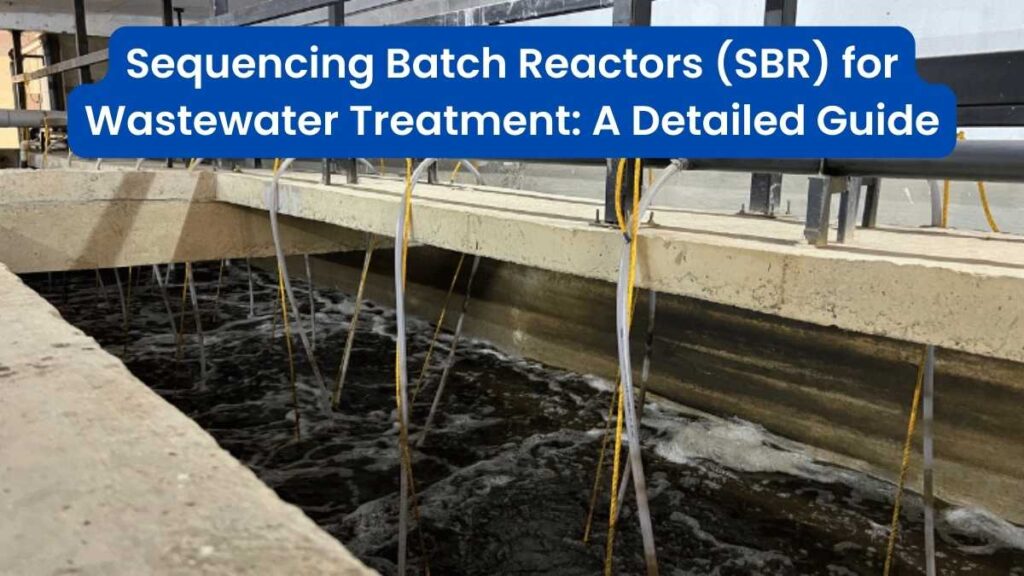
Sequencing Batch Reactors (SBR) for Wastewater Treatment: A Detailed Guide

Introduction With increasing concerns about sewage treatment plant performance and environmental pollution, Sequencing Batch Reactors (SBR) have become an essential wastewater treatment technology. SBR is a variation of the activated sludge process that treats wastewater biologically through a time-based sequence of operations within a single reactor tank. This article explores the origin, operational mechanism, present-day applications, benefits, limitations, and performance enhancement methods of SBR systems. If you require professional assistance in implementing or optimising SBR technology for your facility, feel free to contact us for further information. Origin and Development of SBR The idea of batch reactor treatment dates back to the early 1900s, when activated sludge processes were initially introduced. However, modern SBR systems became widely recognised during the 1950s and 1960s, when advancements in automation made sequential control feasible. During the 1970s, research supported by the Environmental Protection Agency (EPA) in the United States accelerated the adoption of SBR systems. This led to broader implementation in both municipal and industrial wastewater treatment plants. What is a Sequencing Batch Reactor (SBR)? A Sequencing Batch Reactor (SBR) is a fill-and-draw activated sludge system that treats wastewater in controlled batches. Unlike traditional continuous-flow systems, SBR carries out all treatment stages within the same tank using timed cycles. This design removes the need for separate tanks for aeration, settling, and clarification. Main Components of an SBR System Working Principle: The Five Operational Phases SBR systems function in repeated cycles, generally comprising five stages: 1. Fill Wastewater enters the reactor tank.Mixing ensures even distribution of the organic load.Aeration may be provided depending on treatment goals. 2. React Aeration promotes microbial activity.Microorganisms degrade organic pollutants, reducing BOD, nitrogen, and phosphorus levels. 3. Settle Aeration is stopped to allow sludge to settle.Clear treated effluent forms above the settled solids. 4. Decant The clarified effluent is withdrawn through the decanter, leaving sludge behind. 5. Idle The system remains inactive until the next cycle begins.Excess sludge may be removed during this stage for disposal or additional treatment. Typical Duration of an SBR Cycle Cycle duration varies depending on wastewater characteristics, treatment objectives, and operational conditions. Generally, one complete cycle lasts between 4 to 8 hours, distributed as follows: Most systems operate 3 to 6 cycles per day, depending on influent flow and treatment requirements. Critical Factors to Evaluate Before Finalising Cycle Time To ensure compliance and efficient performance, the following parameters must be assessed: Influent Characteristics Effluent Discharge Standards Stricter discharge limits for BOD, COD, TSS, nitrogen, and phosphorus may require longer aeration and settling periods. Sludge and Microbial Characteristics Treatment Objectives Advanced nutrient removal requires carefully designed aerobic, anoxic, and anaerobic phases. Hydraulic and Organic Load Fluctuations Variable influent flow demands dynamic control strategies and possible cycle adjustments. Aeration and Energy Considerations Optimising dissolved oxygen (DO) levels helps minimise energy consumption without compromising efficiency. Current Applications of SBR Technology SBR systems are widely implemented in both municipal and industrial wastewater treatment plants. They are particularly suitable for: Advantages of SBR Systems Limitations of SBR Systems Methods to Improve SBR Performance 1. Optimise Cycle Timing Adjust phase durations according to influent characteristics and load variations. 2. Implement Real-Time Monitoring Use sensors and SCADA systems to track DO, pH, and nutrient concentrations. 3. Enhance Aeration Systems Install energy-efficient blowers and fine-bubble diffusers for better oxygen transfer. 4. Maintain Proper Sludge Control Regular sludge removal prevents bulking and stabilises treatment performance. 5. Apply Advanced Bioculture Solutions Specialised microbial formulations can improve degradation efficiency and nutrient removal. 6. Upgrade Decanting Systems Automated decanters reduce sludge carryover and improve effluent clarity. Conclusion Sequencing Batch Reactors (SBR) offer a reliable and adaptable wastewater treatment solution. Their compact design and ability to treat diverse effluents make them suitable for both municipal and industrial applications. However, achieving optimal performance requires careful cycle management, efficient aeration, proper sludge handling, and advanced monitoring systems. With modern automation and biotechnological improvements, SBR technology continues to evolve as a sustainable and efficient wastewater treatment option. If you are seeking advanced wastewater treatment solutions, including SBR systems, contact us today to discuss the most suitable solution for your facility. Source – teamonebiotech.com

Scroll to Top